
Happy 20th Birthday Philippine Internet!
Posted by Rochelle Sy Chua On March 30, 2014
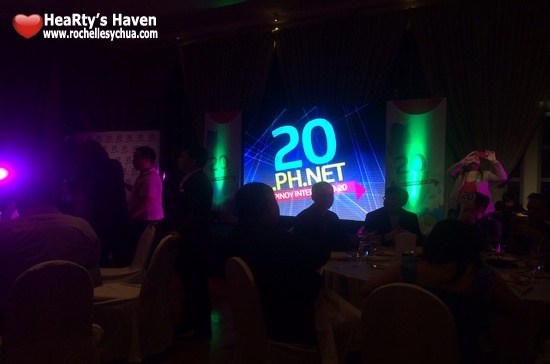
Last night, I had the privilege to join the wonderful 20th birthday celebration of Philippine internet. The event was organised by Smart Communications. All the influential people in the net industry was there. I felt so honoured to be in the same room with people who made Philippines a connected country.
The Philippines got connected to the world wide web in March 29, 1994.
Wow, twenty (20) years!!!
Look at where we are now. Internet has become a necessity already!

It felt nice hearing the stories of people who heavily got involved in the evolution of the internet in the country. Honestly, I was already in reminiscing mode just listening to them. Considering how far we have become. I can truly say that anything is indeed possible!
A timeline of the 20 years of internet in the Philippines:
source: smart.com.ph

- August 1986 – The first Philippine Bulletin Board Systems (BBS) are established. Star BBS and Fil-RBBS go online.
- 1987 – The First Philippine BBS network is established -The Philippine Fidonet Exchange
- 1991-1993 – Multinational companies like Intel, Motorola, and Texas Instruments came in to provide e-mail services.
- June 1993 – Backed by the Department of Science and Technology and the Industrial Research Foundation, the Philnet project (now PHNET) was born.
- July 1993 – Phase I of Philnet Project: Internet & e-mail correspondence among students of partner universities in the Philippines and the Victoria University of Technology in Australia.
- November 1993 – Phase II of the Philnet Project: A grant-in-aid of P12.5M was provided for the use of PCASTRD-DOST and the Industrial Research Foundation (IRF).
- March 13, 1994 – The PHnet Basic Principles and the Internet Code of Conduct were established.
- March 29, 1994, 1:15AM – Benjie Tan of Comnet (supplier of routers to Philnet) is the first to connect to the Internet from the PLDT office in Makati.
- March 29, 1994, 10:18AM – “We’re in.” The first public demonstration of a live Internet connection is displayed at the University of San Carlos in Cebu.
- April 1994 – The Advance Science and Technology Institute (ASTI) under the DOST, the Asian Development Bank (ADB) and the University of Santo Tomas (UST) joined PHNet.
- May 1994 – The University of the Philippines Los Baños (UPLB) and the DOST central office joined PHNet.
- June 1994 – Mosaic Communications (Moscom) offers dialup Internet subscriptions to the public.
- October 1994 – The Industrial Research Foundation (IRF), Philippine Network Foundation, Inc. (PFI), Saint Louis University in Baguio (SLU) and Xavier University (XU) became a part of PHNet.
- December 10, 1994 – The Network Assistance Group (NAG) was established to provide assistance to ISPs & member nodes.
- March 1995 – Republic Act 7925, known as the Public Telecommunications Act of the Philippines, was passed.
- June 1995 – Mindanao State University (MSU), the International Rice Research Institute (IRRI), Asian Institute of Management (AIM), and PDX became connected to PHNet.
- June to August 1995 – Establishment of commercial ISPs such as IBM Philippines, Globe Telecom’s G-Net, Infocom’s Sequel.Net, Iphil Communications, and Tridel Net and Commercial Online services such as Virtual Asia and Cybernet Live.
- 1996 – Entry of foreign ISPs in the Philippines such as Asia Online, a HongKong-based online service, and Pacific Internet, a Singapore-based ISP that acquired Philworld.
- 1996 – Bayantel and Sky Internet teamed up to provide the United Network Access (UNA).
- 1996 – The Philippine Internet Services Organization (PISO) was established.
- 1996 – Establishment of the Philippine Internet Exchange (PHIX).
- June 1996 – Cebu, Zamboanga, Sorsogon, Davao, Bacolod, Legaspi, Naga gained connection via the Cisco 7000 router.
- 1997 – The International Data Corporation (IDC) estimated that there were approximately 85,000 Internet users in the Philippines in 1997.
- 1997 – Global roaming networks allowed subscribers of local ISPs to access Net services abroad and be billed locally.
- 1997 – The biggest television networks gained online platforms with ABS-CBN Interactive Web and GMANetwork.com.
- 1997 – Major broadsheets such as Businessworld Online, Manila Bulletin, Philippine Star, Manila Times and the Philippine Daily Inquirer went online as well.
- 1997 – Establishment of Philippine Network Information Center/Infrastructure Consortium (PHNIC), Philippine Computer Emergency Response Team (CERT-PH), and user groups such as PhilJUG (java) , PhilPlug (Linux), ISiP (Internet Society of the Philippines), APRICOT (Asia-Pacific Region Internet Conference on Operating Technology).
- 1998 – Bert is Evil won a Webby Award in San Francisco, making Dino Ignacio the first Filipino to win the prestigious award.
- 1998 – San Miguel Draft Beer becomes the first fully-functional e-commerce website in the country.
- 1999 – PinoyExchange.com forum started operations and became one of the biggest online communities.
- 1999 – Auction sites like Ebay, eAuctions.ph, and PinoyAuctions became popular.
- 2000 – Rise of blogging and online journals that showcase personal text-based content.
- 2001-2003 – Increasing growth in internet usage at home with the rise of social networking sites like Friendster, MySpace, and Multiply and online gaming platforms like Level Up Games and Ragnarok.
- January 2001 – In an event witnessed by NTC officials, Smart, in cooperation with Nokia, conducted the first successful trials on experimental 3G systems in the Philippines. The company also started rolling out base stations that were easily upgradeable to 3G technology.
- June 2005 – Smart launches Smart Bro.
- November 2005 – In November 2005, Smart demonstrated its readiness to offer a full range of 3G services in a live video conference call and an international roaming call at the annual conference of the Inter-Working Roaming Expert Group of the GSM Association in Cebu City. Smart was the first Philippine telco to demo its 3G technology in an international conference.
- January 1, 2006 – This was the first time the 3G technology was demoed on television by PLDT and Smart chairman Manuel V. Pangilinan and celebrity icon Kris Aquino over the Buzz.
- February 14, 2006 – Launch of “Smart 3G”.
- November 2009 – Smart is the first telco that had successfully completed testing of the most advanced broadband technologies such as HSPA+, Worldwide Interoperability for Microwave Access or WiMAX, and Long Term Evolution or LTE in various parts of the country.
- February 2011 – At the GSMA Mobile World Congress held at Barcelona, Smart unveiled the Netphone™ — its own line of Android-compliant, path-breaking smartphones designed for emerging markets. The Netphone™ is the world’s first smartphone backed by an operator-managed platform (SmartNet).
- August 25, 2012 – Smart was the first to launch the country’s fastest fourth generation (4G) mobile broadband commercial service running on Long Term Evolution (LTE) technology.
My Internet Story

The first time I used the Internet was to chat with strangers. I had applications like TelNet, MiRC, ICQ, Yahoo Messenger, MSN messenger were my favorites to use. The Internet was new! So can you imagine all the yuppies chatting? I loved that I was able to gain friends by logging on the Internet. In fact, some of my friends today? I met them from the time I was chatting at MiRC.
While I was sheltered during my younger years, the Internet was the only thing that my mom allowed me to do. (Thank you, Mom!)
I would keep my daily allowance so I could buy monthly Internet load. Internet was too expensive then. I remember saving money to get PHP500, PHP1,000, and PHP2,000 prepaid Internet load cards.
Internet was too addictive that I would spend days and nights chatting. I came to the point that I became a bit irresponsible —> not eating at the right time, skipping meals, losing sleep, and not doing anything, but logging on to the internet.
I enjoyed being connected that I even studied HTML and created several websites using only notepad. That time, I knew that I was studying the wrong course. The internet only came to the Philippines when I already graduated from high school. It was too bad because I felt I wasted 4 years of my time studying Pharmacy (I initially planned to be a doctor). During 2nd/3rd year of college, I decided that I won’t be practicing the course. I decided to just self-study and try my luck in getting experience from IT companies.
Geocities was my favourite place. MiRC was my life back then. The internet was my food, my happiness, and my inspiration. Looking back, I never regretted it.
Fast forward to 2014, I still am addicted to internet. Hey, I’m now blogging! From notepad to Dreamweaver, now I moved to wordpress. HTML 4 is now HTML 5. Internet is way cheaper! We don’t even want 2Mbps. We want more! We want LTE. Now, we are expecting advanced LTE.
Internet of things is a thing now. We look forward to more innovations. I’m too excited and too looking forward for the next things to come!
William Torres – The Father of Philippine Internet

One of the highlights of my evening was being able to have a picture with the father of Philippine internet! My gosh, William Torres — The person who made it possible for the Philippines to be connected to the world wide web! He was the first to negotiate with the US National Science Foundation to bring the internet to the Philippines. He took the initiative to get funds from government agencies to make this possible. He was successful and here we are 🙂
Happy Happy Happy Happy 20th birthday Philippine internet!
Let’s have many many many more celebrations to come!

Smart launches satellite-powered service to the Philippines
Posted by Rochelle Sy Chua On March 2, 2014
The Philippines is prone to disasters – just ask the victims of typhoon Haiyan (Yolanda). So for Filipinos, this is not news. And in times of disaster, connectivity, and communication is very important. This is especially crucial for people who works in emergency units, military, media, and frontline services.
Smart Communications, Inc. is opening up its satellite-powered communication service to the public. Now, everyone of us can subscribe to SmartSAT & be connected 24/7. No matter where we are in the country, we are assured to have connectivity.

It’s nice to know that Smart is the only homegrown satellite brand in the Philippines. Smart’s satellite service got even stronger when they partnered with Thuraya Telecommunications Company for the SmartSAT service. Why? Because the partnership with Thuraya expanded Smart’s satellite coverage to over 160 countries!
I got to know all these details at the press launch of SmartSAT two weeks ago. Executives from both Smart and Thuraya spoke to select media people about the SmartSAT service. We had the privilege to hear Jon Huertas, Bilal El Hamoui, Mon Isberto & Orlande Vea that day.

SmartSAT is a prepaid service offered as a package worth Php 38,500, inclusive of special satellite SIM with initial credit load of $225 that is valid for one year.
Rates are as follows:
- Calls to Philippines (Smart/Sun/PLDT) – $0.57 per minute
- Calls to Philippines (other networks) – $0.80 per minute
- Calls to other countries – $0.57 to $5.75 depending on location
- SMS rate – $0.23 per 160 characters
- Data rate – $0.015 per 10 kilobytes
- call to customer care – free
If you finished your $225 load before the first year ended, you can buy prepaid cars for 35 units (Php 1,575), 100 units (Php 4,500), and 250 units (Php 11,250).
The Php 38,500 covers the SmartSAT device, SIM card & first year of subscription. However, if you want to extend it, you will need to pay the $250 annual subscription fee.
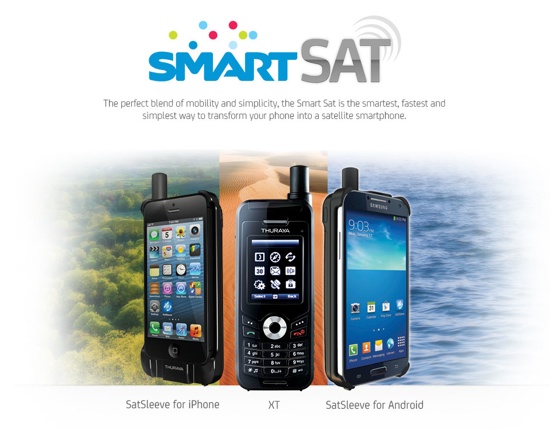
These are the three devices that you can choose from:
It will come to no surprise to my friends that my choice would be the SatSleeve for the iPhone 🙂
- XT Satellite Phone

A stand-alone satellite phone that is suitable for use for emergency and sister response, media coverage, and outdoor recreation. It’s ruggedised meaning it’s water splash proof, dust proof, and shock proof.
- SatSleeve for iPhone 5/5S and Samsung Galaxy S4

With SatSleeve, you can instantly turn your iPhone or S4 into a satellite phone.
All you need to do is dock the SatSleeve to the phone in order to access satellite services (voice, SMS, & data). It serves as an adaptor that integrates GSM and satellite mobile connectivity.

All you need is the SatSleeve mobile app that users can download via iTunes and Google Play Store for free.

Interested about #SmartSAT? Then head on over to Smart’s website to get more details about the SmartSAT here: http://www1.smart.com.ph/International/satellite-services/smart-sat/overview.
No Nonsense Personal Finance by Randell Tiongson
Posted by Rochelle Sy Chua On March 1, 2014
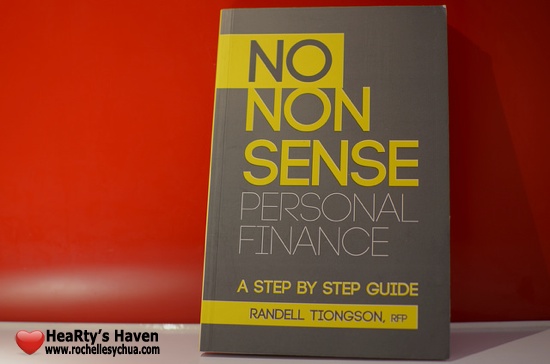
I’ve always admired Randell Tiongson with his passion for finance. Having attended a couple of his seminars proved that. It’s pretty easy to understand what message he was trying to pass around because he wasn’t there to impress. The way I see it is that he was there to help his audience achieve a good way to manage their finances (i.e., financial education). I knew that when Randell Tiongson finally published a book on Personal Finance, people who got themselves a copy will be enlightened with tons of lessons. I, myself, after reading the book immediately went through my goals list and added a section on finance.
Reading the book felt like having a finance expert to talk to you. It seemed like he read our mind. In all honesty, I’m still struggling hard with my finances. The No Nonsense Personal Finance book by Randell Tiongson helped me gather my thoughts and follow a specific process in order to get out of that dilemma.
Basically, Randell’s book focuses on 5 steps in achieving financial peace in our lives.

- Improving Cash Flow
- Getting Out of Debt
- Setting up Your Emergency Fund
- Getting Protected from Life’s Risks
- Investing For Your Future
The author explained what personal finance is all about and stressed that there is no shortcut in achieving personal security. He went on to explain the whole process and each step with easy to understand concepts, examples, & real experiences.
At the end of each chapter, he posted his friends’ thoughts about the steps. I liked the way that he presented all the information in the book. It’s really not only about his personal thoughts on finance but also sharing tips from other people so that we get more perspective about the topic.
Being a Christian myself, I appreciate Randell Tiongson showed his faith and love to the Lord in the book. It just proved that this book was made with a lot of heart and sincerity.
So many aha moments (e.g., emergency funds should be 3-6 months worth of expenses, 70/30 is the earning-spending ratio, and prioritise spending in needs & control splurging on wants) in this book that I intend to practice in my life. Like what the author said, knowledge & awareness are useless if you do not put it into practice.
Get Randell Tiongson’s No Nonsense Personal Finance Book at your favourite bookstores at Php 495.00.

Tamarind
Posted by Rochelle Sy Chua On February 15, 2014
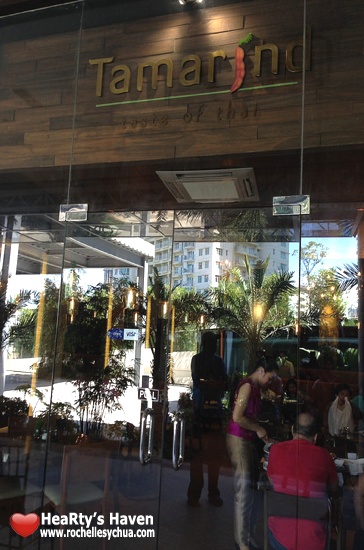
I discovered Tamarind through a group buying site. They were selling coupons for 40%. Since I have a monthly lunch out with my former teammates, I asked them if we can all avail of the discount for one of our luncheons.
A few weeks ago, we decided to use our coupons and visited Tamarind for the first time. The place definitely looked like a high-class Thai restaurant even though the Thai theme isn’t that obvious. Considering SM Aura was positioned to be a high class mall, I guess Tamarind took that challenge and designed their place as such.

I didn’t know that Tamarind was created by the owners of Jatujak, and only found out when I read about it. A few years ago, I tried out Jatujak. I wished they would open somewhere near Makati or Taguig. Guess my wish was granted!
This time, they rebranded Jatujak and made it Tamarind. While the menu is the same, and the place looked much more elegant, it came with a price —> higher menu prices to be exact!
The food tasted as good though. I will definitely be back.
- Sampler Appetizer (Php 252)

Since we wanted to have a taste of everything, we ordered a sampler appetizer. An order of it includes 2 pieces each of fried pork spring rolls, fresh vegetable spring rolls, and shrimp cake. However, Tamarind ran out of fresh vegetable rolls that day so they offered to replace it with fried vegetable rolls. Well, we didn’t have any choice, right?
Among the three appetisers, the shrimp cake was the best! I wish we could have more but we had a lot more dishes to indulge to.
- Tom Yum Goong (Php 308)

We chose to have the Tom yum shrimp with mild spices. Tom yum goong is my favourite Thai soup. I think I won’t ever dare to try any other Thai soup unless they are given to me for free. Because if I have to spend money, I’d rather order something that I’m sure I will love. And Tom yum goong? Guaranteed winner for me! Tamarind definitely didn’t disappoint.
- Fried Rice with Crabmeat (Php 216)

It was either crab fried rice or bagoong fried rice. But I just missed eating crabs so I requested that we order crab fried rice. The order is good for 2 people but for those on a diet, 3 people can share this (which is what we did!).
- Thai Deep-fried Pork Spareribs (Php 293)

My colleagues loved this but I kinda felt it was kinda short of yummy. I guess I just preferred the dry fried spareribs versus the one with sauce. Next time, I’ll probably just try their crispy pata in curry sauce.
- Prawns with Garlic, Cilantro & Pepper (Php 388)

For almost Php 400, we got six pieces of the prawns. It wasn’t spectacular but it was just okay. The shrimps weren’t so hard to peel which proves that they were fresh. I would have wanted a peeled version of this dish though. I felt that the flavours were left in the shells versus the shrimp themselves. Oh well, it was just me.
- Thai Iced Milk Tea (Php 98)

Best iced tea hands down!!! I even took some home! It was that good! A must-order! Made of super yum!! I wish I can find how they prepared this coz I’ll definitely make one for myself everyday if I can 😛
- Sticky Rice with Mango (Php 113)

The sticky rice with mango is the best thai dessert for sharing. It’s a great way to close a great meal. I wish I had more space in my stomach.
Please forgive my photos as I forgot to bring my DSLR that day. However, I brought my trusty iPhone 5 so I think the photos were decent. Anyway, if you are craving for Thai food and you’re in Taguig area, Tamarind is a good place to go to.
Tamarind has great food, great ambiance and decent customer service. When you go there, do not forget to order their Thai iced milk tea, shrimp cakes, and tom yum goong. Definitely worth it!
——————–
Tamarind
5th Level, SM Aura Premier, McKinley Parkway corner 26th St., Bonifacio Global City, Taguig City, Metro Manila, Philippines
+632-556-1156
Urbanears Humlan
Posted by Rochelle Sy Chua On February 15, 2014
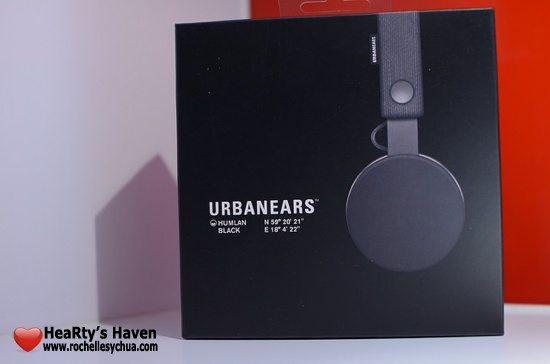
I use headphones a lot. I use it whenever I need to concentrate on my work. I use it when I want to shut myself off the world. I also use it to pump me up so that I get inspired to do whatever task I’m doing. Music inspires me. With a very close work environment, I need to listen to music and at the same time, not make noises to disturb my colleagues. So I continue to find the best headphones to use everyday.
Urbanears Humlan caught my attention because of its unique feature. When I say unique, it’s truly one of a kind!
It’s WASHABLE!!! Yes, have to put the word in all-caps 🙂
Urbanears Humlan is the first washable headphones available in the market. I’m just glad that finally, a company thought of innovating something like this.

When we use headphones a lot, especially in a hot environment, sweat & dirt do stick to our accessory. As time passes by, the headphones would smell bad and would look so dirty that it’s impossible to use anymore. We tend to just buy ourselves new headphones and say goodbye to the old one.
Urbanears Humlan solved that problem. We can just remove the headband & ear cushions, throw it to the laundry, then we can use the headphones again like it was new! Super coolness to the maximum level!! 😀


With the washable feature alone, I think that’s one very strong reason for us to get the Urbanears Humlan. Besides, Urbanears make good audio accessories, you cannot go wrong with it.
Unboxing

Inside the box of the Urbanears Humlan, you’ll see the ff.: the Urbanears headphones, washable ear covers, Urbanears sticker, Urbanears catalog, & warranty card.
Technical Specifications

- 40mm Dynamic Drivers
- Frequency Response 20Hz-20kHz
- Impedance 32Ω
- Sensitivity 100dB
- Max Input Power 100mV@1kHz
Other notable features of the Urbanears Humlan
Zoundplug for instant music sharing

There are times that I want to share the video that I’m watching on my laptop. A laptop’s internal speaker is not really that nice especially if you are in a noisy environment.
If ever you and your friend have your own headphones, then ZoundPlug is a great feature to use. I used it a couple of times already. We can share music together by plugging another pair of headphones via the empty outlet on one side of the ear cap.
Microphone & Remote for hands-free talking

A headphone without a microphone is like technology going backwards in time. While we all use our headphones mainly for music, we tend to also use the same for calls. We use our phones as music players anyways. So it does really make sense for manufacturers like Urbanears to include this must-have feature: a microphone 🙂
The remote control helps us controls the music that we listen to faster. With just a click of the button, we can either play or pause, and change music tracks.
Conclusion
With those 3 features: washable, ZoundPlug, & microphone + remote, I can say that Urbanears Humlan is another headphones to get.
Other things that I like about the Urbanears Humlan is its fabric cord. I lost several headphones before because the cord got tangled and the wire got cut. Good thing that Urbanears thought of this and this gives me assurance that I will be able to use the Humlan for a very long time 🙂

The listening experience is quite good too. Though I must say, that wearing them for over an hour will give discomfort. One thing that I do is to make the headphone fit a bit loose, and that will solve it!
Overall, I really like the Humlan and I still can’t get over the washable feature that it has! So cool!
You can buy the Urbanears Humlan for Php 2,250 at your favourite gadget accessory stores in the Philippines.